How to Grow Strawberries on a Balcony
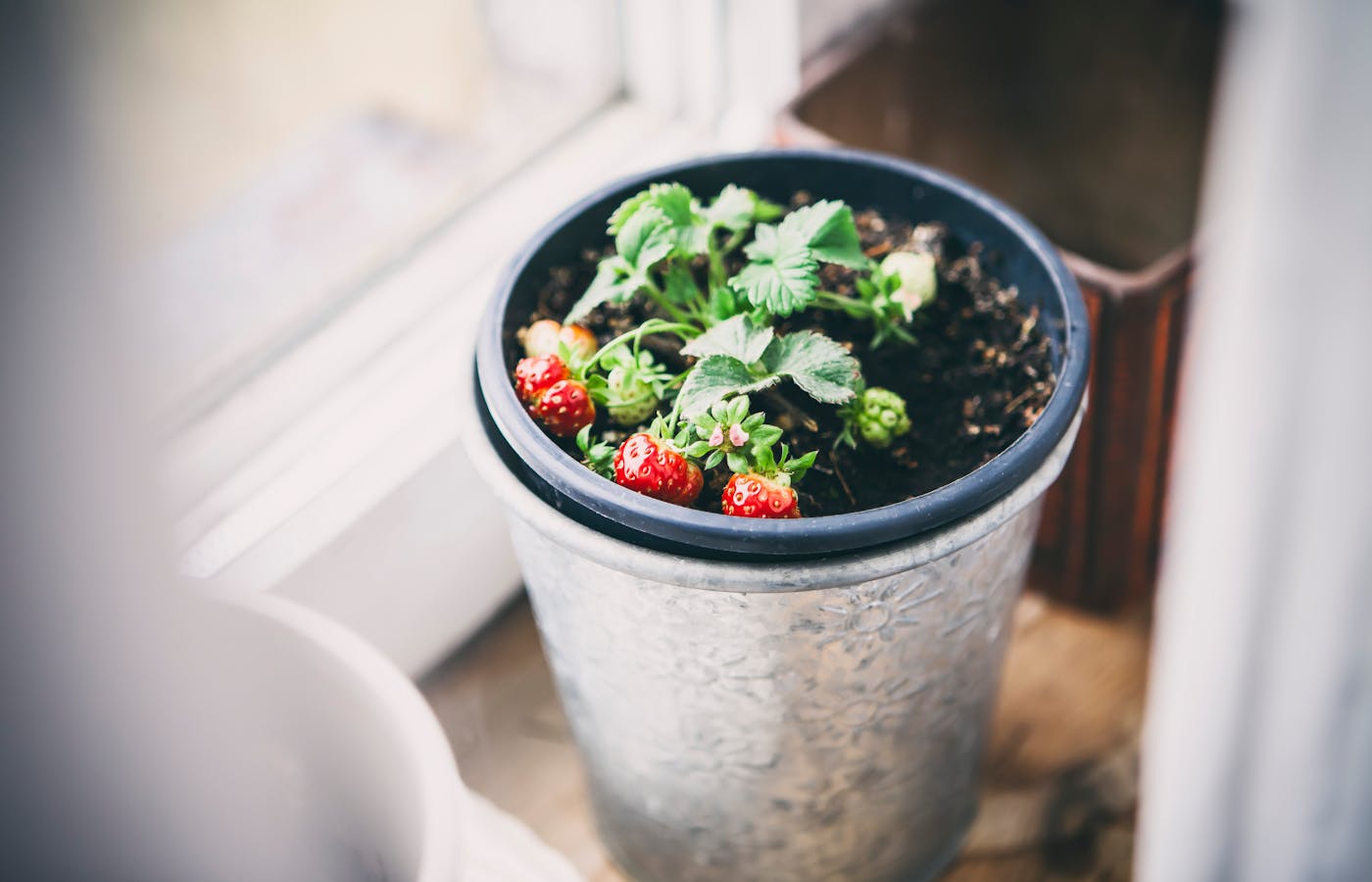
Fresh strawberries can grow surprisingly well in a small outdoor space when the setup is planned around light, containers, and steady moisture. A balcony will not behave like an open garden bed, but it can still support healthy plants, flowers, runners, and fruit if the basic conditions are right.
Learning how to grow strawberries on a balcony begins with choosing a sunny place and a container that keeps the roots cool, drained, and easy to water. The plant is compact, but it reacts quickly when a pot dries out, overheats, or stays soggy after rain.
The goal is not to turn the balcony into a farm. It is to give a few strawberry plants enough space, light, and routine care to produce fruit without making the balcony crowded or difficult to use.
Choose a balcony spot with enough sun for strawberries
Strawberries need strong light to flower and ripen fruit. A balcony that receives at least six hours of direct sun is usually the easiest place to start. Morning sun is gentle and useful, while afternoon sun can be productive but hotter, especially near concrete walls, glass doors, or metal railings that reflect heat.
Before buying plants, watch the balcony for a full day. Notice where sunlight lands, when shade arrives, and whether furniture, balcony walls, or neighboring buildings block the brightest area. A pot placed only a few feet away from the sunniest strip may grow leaves but set fewer berries.
Wind also matters. High balconies can dry containers quickly and can rub leaves against railings. If the balcony is windy, place strawberries where air moves but the plants are not constantly whipped around. A low table, shelf, or railing planter inside the balcony edge can protect the pot while keeping light available.
Strawberries are small plants, but their fruit depends on a bright, steady growing position.
If the balcony receives less sun, choose the brightest corner and accept a smaller harvest. The plants may still be worth growing for their leaves, flowers, and occasional berries, but expectations should match the light.
Pick containers that give strawberry roots steady room
A strawberry container should be wide enough for leaves to spread and deep enough for roots to stay evenly moist. Shallow decorative bowls can look charming for a short time, but they dry fast and leave little margin during hot days. A pot around eight to twelve inches deep is more forgiving for beginners.
Drainage holes are essential. Strawberries dislike sitting in water, and a balcony pot without drainage can sour the root zone after rain or repeated watering. If the container sits on a saucer, empty extra water instead of letting the pot stand in it for hours.
Choose a container you can actually move, check, and water. A large trough may support several plants, but it becomes heavy when wet. A smaller pot may be easy to handle, but it needs more frequent watering. Match the container to the balcony routine, not only to the space available.
| Container option | Best use | Watch carefully |
|---|---|---|
| Single pot | One or two plants in a small corner | Faster drying in heat |
| Window box | Several plants along a rail or wall | Even watering from end to end |
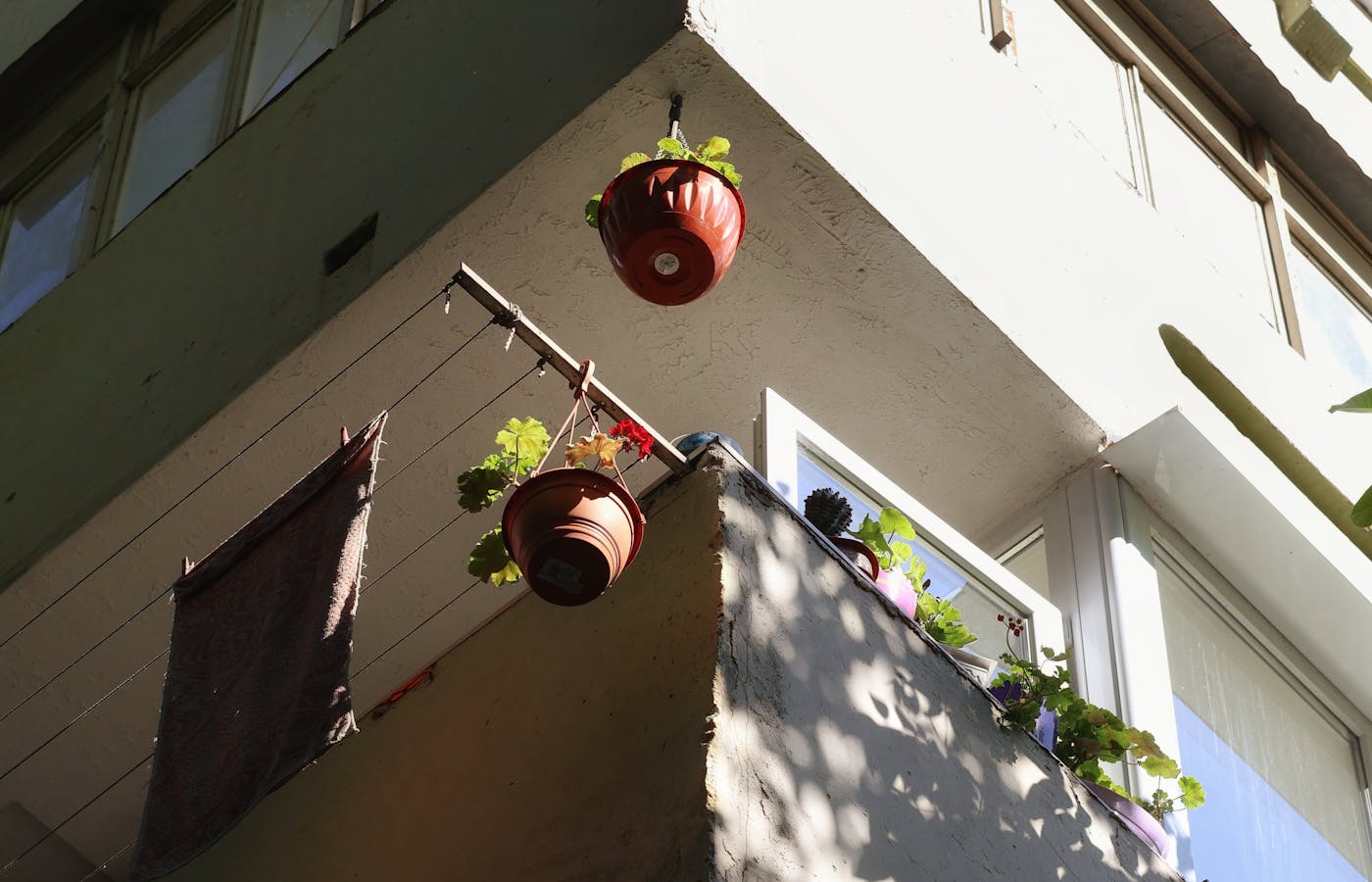
| Hanging basket | Keeping floor space open | Weight, wind, and reach |
| Strawberry jar | Multiple plants in a compact footprint | Pockets that dry unevenly |
Leave enough room between plants for airflow. Crowded leaves hold moisture, hide pests, and make it harder to find ripe berries before they soften.
Use a light soil mix and plant crowns correctly
Balcony strawberries need soil that holds moisture without becoming dense. A light potting mix is usually better than garden soil because it drains more evenly and stays easier to manage in containers. If the mix feels heavy, add perlite or another light amendment so water can move through the pot.
The crown is the central point where leaves and roots meet. It should sit at soil level, not buried and not lifted high above the surface. A buried crown can rot, while exposed roots dry out. This planting depth is one of the small details that makes a large difference in container strawberries.
When planting, firm the soil gently around the roots without packing it hard. Water once to settle the mix, then check whether the crown is still sitting correctly. Soil often shifts after the first watering. Add a little mix around exposed roots if needed, but keep the crown visible. Strawberries need steady moisture, so it helps to water balcony plants without making a mess while keeping runoff away from the walking area.
Good balcony strawberry planting habits include:
- using fresh, loose potting mix instead of compacted old soil;
- placing the crown level with the soil surface;
- leaving space between plants for leaves and airflow;
- watering after planting so soil settles around roots;
- checking the pot again after the first sunny afternoon.
Starter plants are often easier than seeds for a balcony harvest. Seeds can be interesting, but they take patience and may not fruit quickly. Young plants give beginners a clearer sense of spacing, watering, and growth.
Water balcony strawberries without leaving soggy pots
Watering is the daily detail that shapes most container strawberry problems. Balcony pots dry faster than garden beds because air moves around the container and the root area is limited. At the same time, a pot with poor drainage can stay wet at the bottom even when the top looks dry. If strawberries share space with hanging plants for apartment balconies, keep their watering needs separate so one setup does not drip into another.
Check moisture with a finger before watering. If the top inch feels dry and the pot feels light, water slowly until moisture reaches the root zone and excess begins to drain. Quick splashes often wet only the surface. Deep, calm watering is better because roots follow steady moisture.
Avoid spraying the leaves every time you water. Wet leaves in a crowded balcony corner can invite spotting or mildew, especially when airflow is low. Aim water at the soil surface and let the leaves dry naturally after rain. Mulch is optional in small pots, but a thin layer of straw or dry leaves can reduce splash and slow surface drying.
A strawberry pot should feel consistently moist, not wet one day and dusty the next.
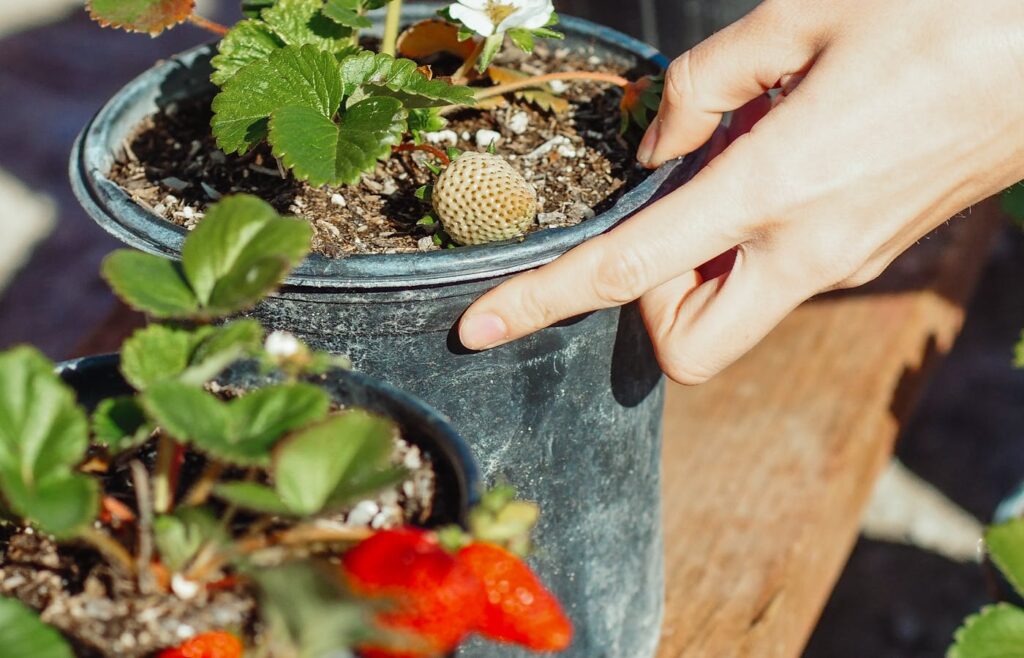
In hot weather, strawberries may need checking daily. In cool or shaded conditions, they may need much less. The correct rhythm comes from the plant, the pot size, and the balcony weather.
Feed plants, trim runners, and watch for small pests
Strawberries in containers depend on the nutrients inside a small pot. A balanced, gentle feeding routine helps plants produce leaves, flowers, and berries without forcing weak growth. Use a fertilizer suitable for edible container plants and follow the label at a modest rate. More fertilizer is not a shortcut to sweeter fruit.
Runners are long stems that create new baby plants. They are useful if you want more plants, but they can also drain energy from a young balcony pot. In the first season, trim many runners so the main plant can focus on roots and fruit. If the plant is strong and you want to propagate it, root one runner in a nearby small pot and remove the extras.
Balcony strawberries can attract aphids, mites, slugs, birds, and curious pets depending on the setting. Inspect the undersides of leaves, flower stems, and fruit clusters when you water. Early problems are easier to handle than a dense pot full of hidden pests.
Use a simple maintenance list during the growing season:
- remove yellow or damaged leaves near the base;
- trim extra runners before they tangle through railings;
- check flowers and fruit for insects or soft spots;
- rotate pots if one side receives stronger light;
- harvest ripe berries before they sit too long.
A clean, open plant is easier to water, feed, inspect, and harvest. That matters more on a balcony where every container is close to furniture, walls, and walking space.
Build a weekly balcony strawberry care routine
A small routine keeps balcony strawberries from becoming mysterious. Plants change quickly in containers, and a weekly check helps you catch drying soil, crowded leaves, pests, runners, and ripening fruit while the fixes are still small. The routine does not need to be complicated.
Set a regular day to inspect the plants more carefully than you do during quick watering. Look at the crown, soil surface, leaf color, underside of leaves, flowers, and fruit. Check whether the pot still drains well and whether the plant has leaned toward the sun. If the balcony has been windy, make sure hanging baskets, saucers, and railing planters are still secure.
Use this weekly care rhythm:
- Check soil moisture before adding water.
- Remove dead leaves and any spoiled fruit.
- Turn the pot if one side is stretching toward light.
- Trim runners you do not plan to root.
- Inspect leaf undersides and fruit clusters for pests.
- Feed lightly when the schedule calls for it.
- Harvest berries that are fully red and easy to lift from the stem.
During harvest season, pick berries often. Fruit left too long can soften, attract pests, or rot against damp leaves. If birds visit the balcony, light netting or a sheltered plant position may protect ripening berries without blocking all airflow.
Growing strawberries on a balcony is most rewarding when the setup stays simple: sun, drainage, light soil, steady watering, modest feeding, and regular trimming. Start with a few plants, learn how the balcony behaves, and adjust the pot or routine before expanding.